MCA Scar Treatment: How Dry Needling Can Smooth and Soften Scars Naturally
A scar can be a lasting reminder of surgery, an injury, acne or a burn. If its texture or colour draws your attention, MCA scar treatment may be one option to explore. This form of controlled needling aims to encourage the skin’s own repair response, without implanting pigment.
At Aesthetic By Nurse, treatment begins with a nurse-led assessment, not a one-size-fits-all protocol. I am a fully qualified medical nurse and paramedical tattoo specialist, insured for the treatments I offer, and I’ll discuss whether needling, pigment camouflage, a combination of approaches or a referral is most appropriate for you.
What is MCA scar treatment?
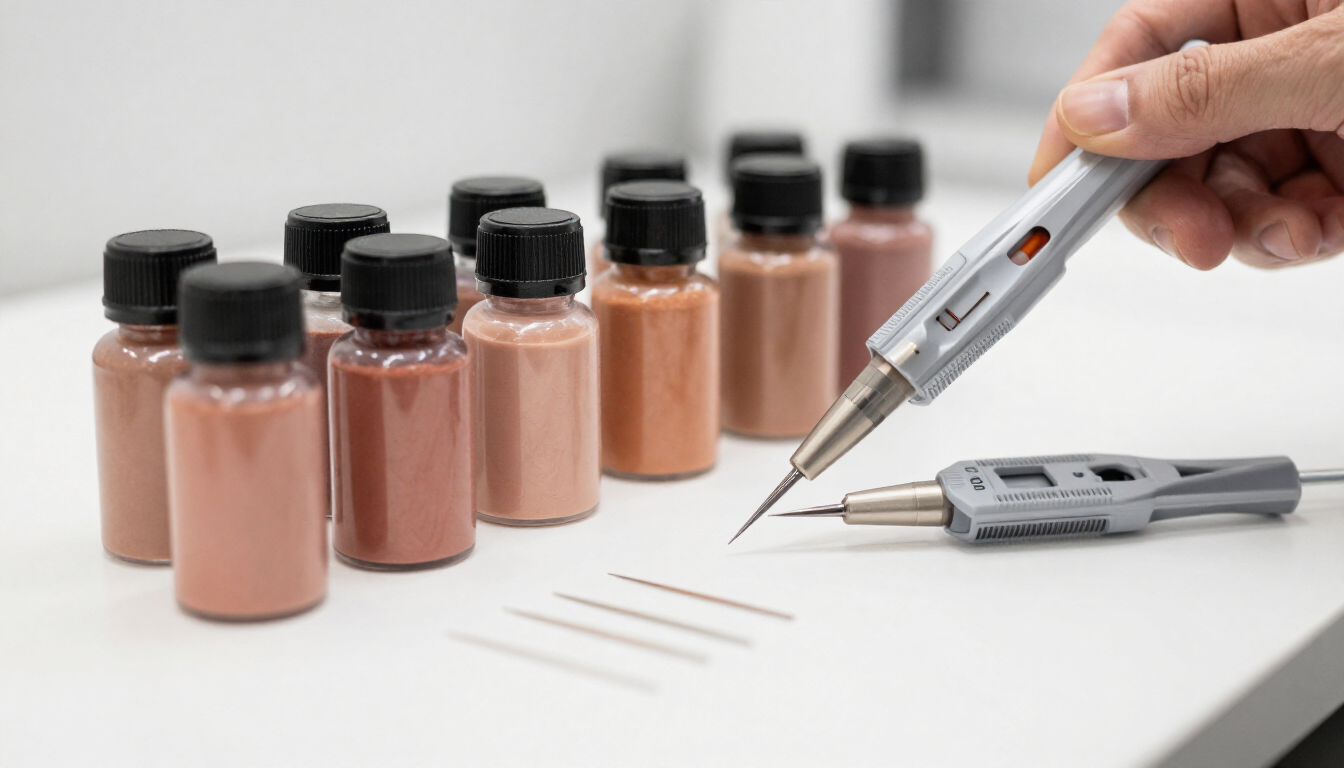
MCA is commonly used to mean Multitrepannic Collagen Actuation. It is also known as inkless scar needling or medical camouflage needling. The treatment uses a specialist device with fine needles to create controlled micro-channels in selected scar tissue. There is no skin-coloured tattoo pigment in the needling step.
The aim is to prompt a measured wound-healing response. As the skin repairs, collagen remodelling may help improve the scar’s texture, softness and flexibility. Some clients may also see a change in the appearance of the scar’s colour, but this is less predictable. The body does the healing work; the treatment cannot guarantee that a scar will flatten, fade or disappear.
MCA is a term used for a needling approach, not a guarantee of a particular result. Research on microneedling for scars is promising for some people, but evidence for microneedling generally is not proof that every branded MCA protocol works in the same way. Results vary, and the available evidence does not support promises of complete scar removal.
How is needling different from pigment camouflage?
Needling works on texture. It aims to support the skin’s natural remodelling response, which may make some scars feel smoother or more supple over time. No pigment is implanted.
Pigment camouflage works on colour contrast. Paramedical micropigmentation deposits carefully selected pigment into suitable, fully healed scars to help them blend more closely with nearby skin. It does not remove scar tissue or reliably change its texture.
For some clients, a staged combination may be considered: first addressing texture with needling, then reassessing whether pigment camouflage could help with colour contrast. These are separate procedures, and they may not be suitable at the same time. The scar must be fully healed and stable before pigment is considered.
Which scars may be suitable?
MCA scar treatment may be considered for selected surgical, burn, acne and injury scars, including some indented scars and some raised or firm scars. Suitability depends on the type of scar, its age, location, colour, texture and your medical history.
A scar that is still red, changing, inflamed or fragile needs careful assessment before any procedure. Needling is not automatically suitable for every raised scar. Keloid scars, which can grow beyond the original wound, need particular caution: further injury to the skin may aggravate them. If there is any doubt about what a mark is, or a lesion is changing, it should be assessed medically before cosmetic treatment.
Scar maturation is assessed individually. The scar must be closed and healed, but there is no single waiting period that makes every scar suitable. Pigment camouflage usually requires a stable scar with settled colour and texture; at Aesthetic By Nurse, scar maturity is assessed at consultation and scars are typically fully healed for 6–12 months before medical tattooing is considered.
Your consultation and treatment plan
Your consultation is a chance to explain what you would like to improve and ask questions in a calm, private setting. I will assess the scar’s appearance and maturity, discuss relevant medical history and consider factors that may affect healing. These can include skin conditions, medicines, previous scar behaviour and your tendency to form raised scars.
I’ll explain the expected benefits and limitations, likely number of sessions, possible risks and aftercare. If needling is not appropriate, we can discuss alternatives such as pigment camouflage, or whether you should seek advice from another healthcare professional first.
The treatment
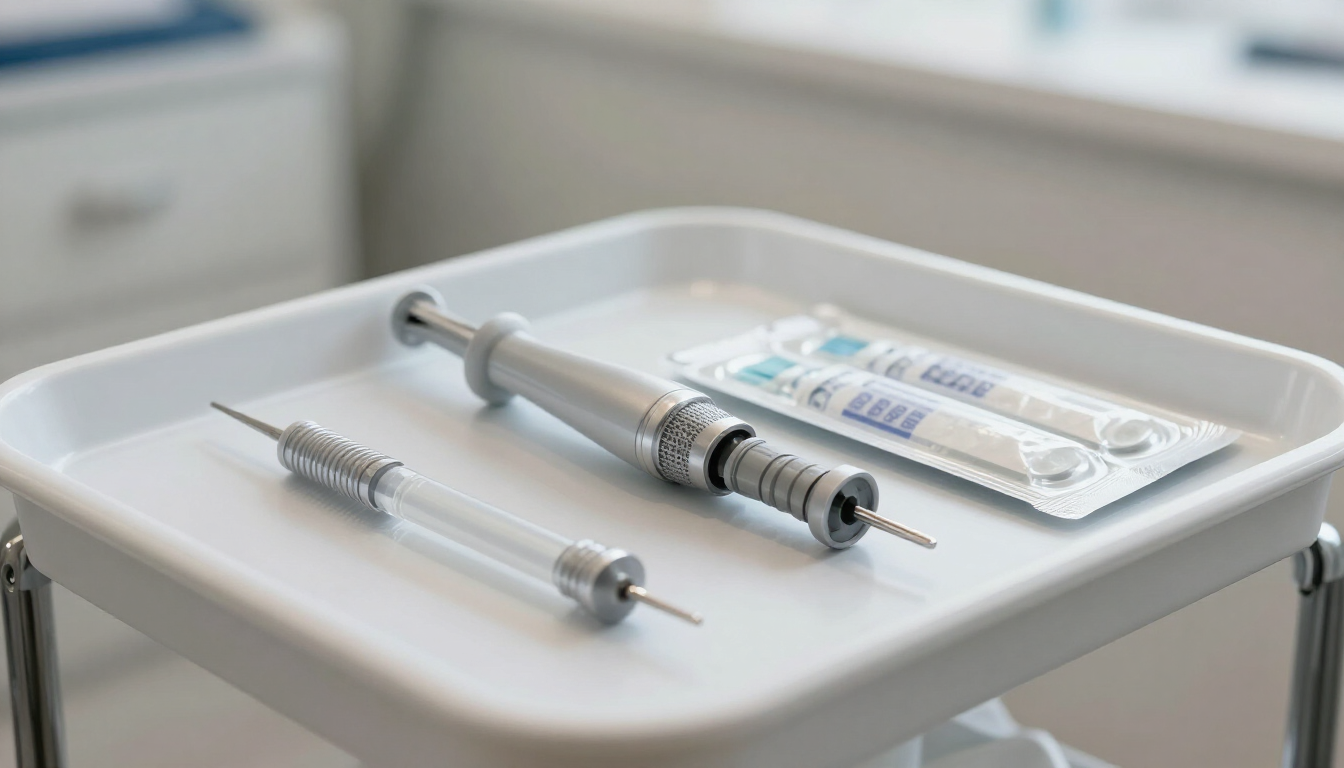
If we proceed, the area is prepared using appropriate hygiene and sterile supplies. A professional device is passed over the selected scar using a treatment plan tailored to the site and the skin. The treatment may feel uncomfortable, but comfort is checked throughout. Temporary redness, sensitivity, swelling or pinpoint bleeding can occur; the exact response depends on the individual and the treatment.
Healing, aftercare and number of sessions
After treatment, the area may look red or feel tender. Small crusts can form as the skin heals. Follow the written aftercare instructions provided for your treatment: keep the area clean, do not pick or pull at crusts, protect healing skin from direct sun and avoid applying unapproved active products. Your practitioner may also advise you to avoid activities such as swimming, saunas or strenuous exercise while the skin is healing.
Allow time for the skin to settle before judging the result. Surface healing and deeper collagen remodelling happen on different timelines, and any improvement may become clearer over the following weeks or months. Contact your practitioner or seek medical advice if you develop increasing pain, spreading redness, warmth, pus, fever or other signs of infection.
There is no fixed number of sessions for every scar. Many treatment plans involve several sessions, often around three or more, with enough time between appointments for the skin to heal and the response to be reviewed. The interval and total number depend on the scar and your progress; further treatment is not automatic. A review after each session helps guide the next step.
Realistic expectations: gradual, individual improvement
MCA scar treatment is intended to enhance the appearance and feel of selected scars, not erase them. Some scars may become softer or less noticeable; others may show little change. Colour can remain different from the surrounding skin, and pigment changes or irritation are possible. Further sessions may not improve the result, so reassessment is an important part of safe care.
Research into microneedling for scars is developing. A clinical review describes potential benefits for selected scars while noting that stronger comparative studies are needed. A small study of early postsurgical scars also reported improvements, but its findings do not predict an individual outcome or establish a universal MCA protocol.
The most reassuring starting point is an honest assessment and a treatment plan that respects your skin’s healing. For a personalised discussion about MCA scar treatment, medical camouflage needling or scar camouflage, contact Aesthetic By Nurse or book a consultation.
Have questions about this treatment?
Book a confidential, unrushed consultation with a qualified medical nurse and paramedical tattoo specialist.
Book a consultation